
Air Tightness Testing in Widnes
Enquire TodayAt Energy Assessment Solutions, we provide comprehensive air tightness testing in Widnes to enhance the energy efficiency of your building. Our service identifies air leakage points and ensures compliance with energy regulations, crucial for both domestic and commercial properties.
We use advanced blower door technology and thermographic imaging to accurately measure air leakage, serving clients across Widnes and the surrounding WA8 7 postcode area. Contact us today to schedule your assessment and improve your building's performance.
What Is Air Tightness Testing?
Air tightness testing identifies and quantifies air leakage in a building. We conduct this diagnostic service to help optimise your building’s energy efficiency in Widnes.
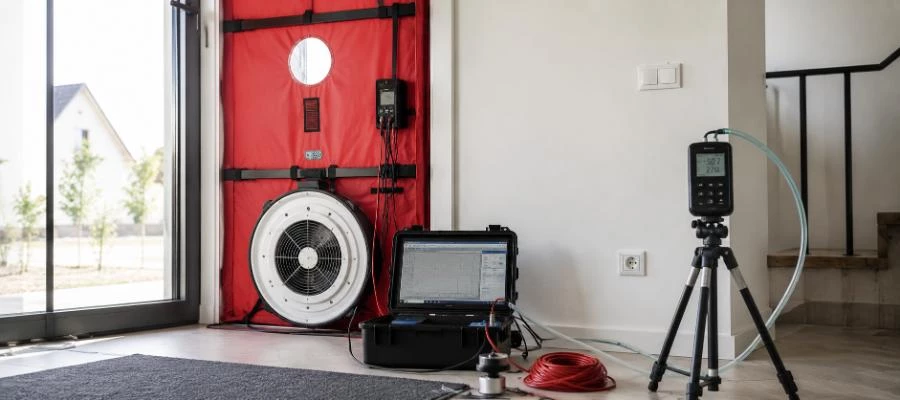
Our tests are essential for meeting Part L of the Building Regulations, which targets conservation of fuel and power. The process involves creating a difference in air pressure using blower doors, allowing us to measure air infiltration accurately.
Using calibrated equipment, such as digital manometers, we can calculate air permeability rates, which indicate how well a building's envelope prevents air leakage. Compliance with Part L typically requires an air permeability rate of no more than 10 m³/h·m² at 50 Pascals.
This testing is beneficial for both new constructions and existing properties seeking to improve energy performance. We also work with developers to help achieve BREEAM ratings, enhancing overall building sustainability.
Whether for residential homes or commercial buildings, our service supports efficient energy use and helps reduce utility costs. Contact us to schedule a test and start saving energy.
What Types of Air Tightness Testing Are Available in Widnes?
Different approaches to air tightness testing in Widnes help us address various needs, ensuring buildings meet energy efficiency standards such as Part L of the Building Regulations for new constructions.
Baseline Testing: Conducted early in construction to identify leakage points, often using blower door tests to assess building envelope integrity. This early-stage testing can prevent costly corrections later on.
Final Testing: A detailed examination at project completion to ensure compliance with regulatory standards. It often includes pressure difference tests to measure air leakage rates, validating the building's energy performance.
Diagnostic Testing: Helps in existing buildings to pinpoint specific leakage areas using smoke pencils or air flow meters. It's particularly beneficial for retrofitting projects aiming to enhance building performance.
Thermographic Surveys: Use of infrared cameras to visualise air leakage and insulation issues, especially effective in detecting thermal bridging and insulation faults that may not be obvious in standard tests.
Each test plays a crucial role in enhancing energy efficiency and building performance. Contact us to learn which testing method suits your project needs.
What Properties Are Suitable for Air Tightness Testing?
We provide air tightness testing suitable for a variety of properties, including residential homes looking to reduce energy bills by identifying leaks and inefficiencies. For commercial buildings, our tests help enhance compliance with Part L of the Building Regulations by identifying areas of energy loss that can be mitigated.
Public sector facilities benefit from improved sustainability credentials, aligning with BREEAM standards. Our testing uses blower door equipment to measure air leakage rates, enabling precise calibration for each building type.
Properties in conservation areas or historic buildings can also benefit, though they may require tailored solutions due to unique structural challenges. We employ non-intrusive methods that respect the architectural integrity while still providing accurate data.
By highlighting areas that require improvement, our testing facilitates informed decisions for energy efficiency upgrades. Call us today to discuss how we can assist with your specific property needs.
When Is Air Tightness Testing Needed in Widnes?
Air tightness testing is often needed during several lifecycle stages of a building. New builds in Widnes require compliance checks with Building Regulations, such as Part L, before completion.
This process involves using a blower door test, which measures the building's air leakage rate by analysing the pressure differences. Existing buildings may need testing when refurbishments occur to ensure energy efficiency standards are met and to assess improvements from retrofitting.
Homeowners and facility managers might also schedule testing when experiencing high energy bills or drafts, which could indicate hidden air leaks in insulation or around windows and doors. Additionally, commercial properties undergoing retrofits for energy performance certification or adhering to the Energy Performance of Buildings Directive can benefit from testing.
Prompt testing can lead to significant long-term savings, a reduction in carbon footprint, and compliance with sustainability goals. Contact us to schedule your air tightness test today.
How Does Air Tightness Testing Work?
Our air tightness testing process involves several key steps to ensure buildings meet Part L requirements of the Building Regulations:
Preparation: We seal intentional air vents and openings, taking care to avoid affecting the operation of the building. This ensures that only unintended air leakage is measured.
Setup: Blower doors are fitted onto external doors to create pressure differentials. We often use equipment calibrated to UKAS standards to guarantee precise measurements.
Measurement: Airflow meters and pressure sensors calculate leakage rates accurately. This part of the process is crucial for establishing the building's air permeability in accordance with ATTMA TSL1 standards.
Analysis: Results are analysed with thermal imaging and smoke pencils to visually identify areas of concern where air is escaping.
Reporting: We provide a detailed report with findings and practical recommendations for improving energy efficiency, which can include advice on sealing gaps or improving insulation.
Engage our team to help ensure your building's energy performance is optimised.
How Long Does Air Tightness Testing Take?
Air tightness testing typically takes around two to four hours per property in Widnes. The duration can vary depending on the size and complexity of the building and any access restrictions.
We use equipment such as blower doors, which have precision instruments to measure air leakage accurately. Larger buildings or those with intricate structures may extend this timeline, as it requires more comprehensive testing across various zones within the property.
Additionally, structures with multiple storeys or unique architectural features could require specific testing protocols to ensure comprehensive results. Our team adheres to standards set by the Building Regulations Approved Document L, which influences the testing procedures and reporting required.
We ensure minimal disruption, allowing occupants to resume normal activities swiftly. If you need more information about scheduling a test, please contact us.
Who Needs Air Tightness Testing in Widnes?
Various stakeholders require air tightness testing in Widnes. Building contractors need it to ensure regulatory compliance for new developments under standards such as Part L of the Building Regulations.
Tests typically involve using blowers and pressure gauges to identify leaks. Architects and engineers incorporate testing results to enhance design efficiency, often using the data to choose materials and construction methods that improve thermal insulation.
Property owners and facility managers employ our services to improve buildings' energy performance by identifying potential air leaks that could lead to increased heating and cooling costs.
Consultants may also need air tightness testing to facilitate sustainability assessments, such as BREEAM or LEED certifications, ensuring buildings meet energy efficiency criteria. We are equipped to handle residential, commercial, and public sector projects, providing tailored solutions to meet the specific requirements of each.
Contact us to discuss your project's needs.
How Much Does Air Tightness Testing Cost in Widnes WA8 7?
Air tightness testing typically costs between £200 and £400 per test in Widnes. The cost can vary based on the building's size, type, and complexity.
For example, a standard residential property might be on the lower end of the scale, whereas a large commercial building could incur higher costs. Tests for properties with multiple zones or those requiring detailed thermographic analysis may also attract additional charges.
Our testing adheres to the UK Building Regulations Part L, ensuring accurate assessments for energy efficiency. We use equipment such as blower doors to measure infiltration rates and locate air leakages efficiently.
With our experienced team, you can be confident in meeting required air permeability standards. Contact us for a tailored quote based on your specific requirements to ensure compliance and efficiency.
What Are the Benefits of Air Tightness Testing in Widnes WA8 7?
There are several key benefits to conducting air tightness testing in Widnes:
Energy Savings: By identifying leakages, testing helps reduce energy bills. Our tests use equipment like blower door systems, which can detect air infiltration rates accurately.
Regulatory Compliance: We ensure your building meets Part L of the Building Regulations, which mandates specific air permeability targets related to carbon emissions. Compliance may be necessary for obtaining completion certificates for new builds.
Improved Comfort: Air tightness testing helps eliminate drafts and maintain consistent indoor temperatures. Devices such as smoke pens can be used to visually identify problem areas, ensuring a cosy indoor environment.
Increased Property Value: Enhanced energy efficiency ratings can increase the value of your property. Many buyers seek homes with EPC ratings A or B, which indicate lower energy costs.
Overall, these benefits contribute not only to financial savings but also to environmental sustainability and an improved living or working space. Get in touch with us today to schedule your air tightness test in Widnes.
What Regulations Apply to Air Tightness Testing?
Air tightness testing must comply with Part L of the Building Regulations in the UK. These regulations focus on the conservation of fuel and power, mandating efficiency in new and refurbished buildings. To conduct air tightness tests, we use a blower door system, which measures the air permeability of the building envelope by creating pressure differences.
Our tests are conducted at different pressure levels, typically 50 Pascals, to ensure precision.
We also adhere to the ATTMA (Air Tightness Testing and Measurement Association) Technical Standards, which outline the procedures for testing in residential, commercial, and industrial properties. Our team is certified to provide the necessary documentation, including the Energy Performance Certificate (EPC) if required, which proves compliance.
Working closely with builders, developers, and architects, we help identify areas where improvements can be made to enhance energy efficiency and meet the required standards. Contact us to schedule your assessment.
Why Choose Energy Assessment Solutions for Air Tightness Testing in Widnes?
Choosing Energy Assessment Solutions for air tightness testing in Widnes ensures expert service aligned with regulatory standards such as Part L of the Building Regulations. Our team uses the latest blower door systems to detect air leakage and accurately measure airtightness.
We assess properties from residential homes to commercial buildings, providing a detailed analysis of potential energy loss. Our reporting includes quantitative data and visual thermographic imaging, offering insights to enhance efficiency and reduce long-term energy costs.
We also identify areas needing improvement, such as gaps around doors and windows or inefficient insulation. With our solutions, you can optimise your building’s performance and contribute to environmental sustainability.
Contact us today to schedule your assessment and start improving your building’s performance.
Frequently Asked Questions
How often should air tightness testing be carried out?
Air tightness testing is typically done at completion for new builds and during significant renovations for existing buildings to ensure ongoing compliance and efficiency.
Is air tightness testing necessary for older properties?
Yes, testing is beneficial for older properties in Widnes to identify leaks and improve energy efficiency. Specific recommendations can be provided based on the property's structure.
Can air tightness testing be conducted in all weather conditions?
Testing is generally effective in various weather conditions. However, extreme temperatures or winds in Widnes may affect results, ensuring we schedule appropriately.
Does successful testing influence property value?
Yes, successful air tightness testing can enhance your property's energy efficiency rating, potentially increasing its market value in Widnes.
How do I prepare for air tightness testing?
Preparation involves ensuring the building is complete with all windows and doors installed and closed, while intentional openings are temporarily sealed.
Get a Free Quote for Air Tightness Testing in Widnes
Contact Energy Assessment Solutions today to organise your air tightness testing in Widnes and achieve greater efficiency for your property.
We cover Widnes (Cheshire)