
Sound Testing in Dunscroft
Enquire TodayAt Energy Assessment Solutions, we offer comprehensive sound testing services throughout Dunscroft and the surrounding DN7 6 area. Sound testing is crucial for assessing the acoustic performance of buildings, ensuring they meet regulatory standards.
Our services cover a variety of properties, from residential buildings to commercial spaces, using advanced equipment and methodologies for accurate results. Whether you're in need of pre-completion or compliance testing, our experienced team is here to assist you.
What Is Sound Testing?
Sound testing is the process of evaluating the acoustic performance of a building to ensure it meets certain sound insulation standards. At Energy Assessment Solutions, we conduct sound tests to assess the effectiveness of walls, floors, and ceilings in preventing noise transmission between adjacent spaces.
This helps in meeting Building Regulations such as Approved Document E, which covers new and existing buildings across Dunscroft.
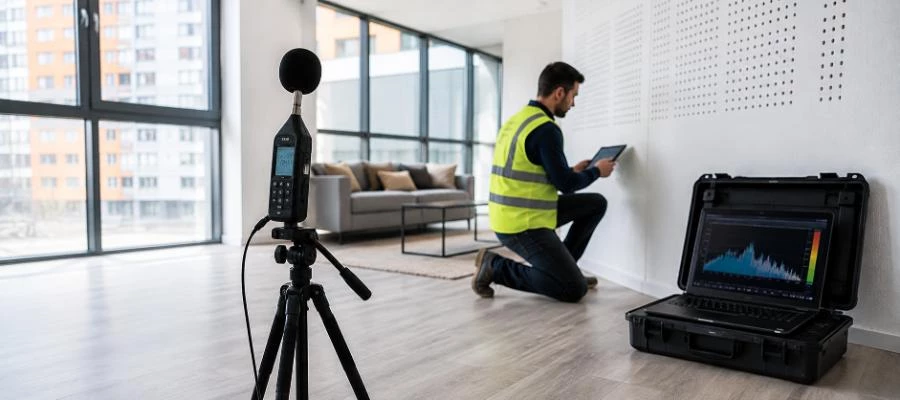
We use specialised equipment like sound level meters and loudspeakers to produce and measure noise levels, examining both airborne and impact sound insulation. Our tests typically involve measurements of reverberation time, background noise levels, and sound pressure levels across different frequencies.
We cater to a variety of client types, including residential developments, schools, and commercial properties. Our precise measurements ensure your project complies with the necessary standards, helping to avoid potential costly corrective actions.
Get in touch with us to schedule your sound testing and ensure compliance.
What Types of Sound Testing Are Available in Dunscroft DN7 6?
There are several sound testing types that we offer in Dunscroft, each tailored to different needs:
Airborne Sound Testing: Measures sound insulation between walls and floors by using specific equipment like loudspeakers and microphones to generate and capture sound waves. This testing is vital for assessing compliance with Building Regulations Part E.
Impact Sound Testing: Evaluates the performance of floors in terms of impact noise by using impact tapping machines that simulate footsteps and other impacts. This ensures flooring structures meet the impact sound criteria, particularly in multi-storey buildings.
Reverberation Time Testing: Assesses the time it takes for sound to decay within a space, helping to ensure pleasant acoustics in environments such as concert halls and lecture theatres. We calculate reverberation time using time delay machines and sound level meters.
Background Noise Level Testing: Determines the ambient noise levels affecting a space by taking measurements over a specified period. This test helps in spaces like offices and residential buildings to maintain optimal sound conditions.
Each method is essential for ensuring optimal acoustic performance and compliance, contributing to effective sound management in various environments. Contact us today to schedule your sound testing in Dunscroft.
What Types of Properties Require Sound Testing in Dunscroft?
Sound testing is crucial for a range of properties to comply with regulations and improve acoustics. At Energy Assessment Solutions, we adhere to Approved Document E of the Building Regulations, ensuring properties meet the required standards for airborne and impact sound insulation.
Our services cater to:
New constructions, including residential, commercial, and educational buildings, where soundproofing is vital for comfort and privacy.
Converted or refurbished properties that require compliance with updated regulations and must pass sound insulation tests before completion.
Multi-storey residential buildings needing assessment to ensure that both airborne and impact sound insulation meet the required decibel levels.
Office spaces requiring evaluations to enhance acoustic environments, particularly in open-plan areas where background noise can be disruptive.
We use calibrated measurement equipment, such as sound level meters and tapping machines, to provide accurate results. Whether you're undertaking a new build or refurbishment project, sound testing is an essential requirement to ensure compliance and optimal acoustic performance.
When Is Sound Testing Needed in Dunscroft DN7 6?
Sound testing is typically needed at various stages of a construction project to ensure compliance with building regulations set by the Building Regulations Approved Document E. At Energy Assessment Solutions, we recommend conducting tests:
Upon completion of constructing separating floors and walls to verify that they meet sound insulation requirements for airborne and impact sound transmission.
Before occupancy of new residential or commercial buildings, ensuring that the spaces adhere to acoustic standards for occupant comfort and privacy.
During the refurbishment of buildings to ensure that any alterations align with updated Part E standards. This is crucial when converting a property into a mixed-use development.
Additionally, it is beneficial to carry out pre-completion testing using calibrated Sound Level Meters and Impact Hammers to identify potential acoustic weaknesses early. Our team is ready to assist at the appropriate stage to achieve compliance and enhance acoustic comfort.
Contact us today to schedule your sound testing appointment.
How Does Sound Testing Work?
Sound testing involves several key steps to accurately measure sound insulation for new builds and refurbishments. These tests comply with the Building Regulations Part E, which sets standards for sound resistance in residential buildings.
Setup: We position calibrated Bruel & Kjaer speakers and microphones strategically in the test area to ensure effective sound coverage and accurate data capture.
Airborne Testing: A speaker emits white noise in one room, and the reduction in sound level is measured in the adjacent room using a sound level meter to determine airborne noise insulation.
Impact Testing: A tapping machine, consistent with ISO 140-7 standards, strikes the floor to simulate footfall, with sound levels measured in the room below to assess impact noise transmission.
Analysis: The collected data is processed using software such as NorBuild to evaluate compliance with regulations and identify potential areas for acoustic improvement.
This methodical process ensures precise results, helping architects and builders implement necessary design adjustments. Let us assist you in achieving compliance efficiently and reliably.
How Long Does Sound Testing Take?
Sound testing typically takes a few hours to complete for a small to medium-sized building in Dunscroft. The duration can vary depending on the property size, the number of partitions, and complexity of the test required.
For larger buildings, it may take between one to two days, as several tests might be needed across different floors or sections.
We use equipment such as precision sound level meters and tapping machines to evaluate airborne sound insulation and impact sound levels. Tests comply with Part E of the Building Regulations, ensuring standards for noise reduction are met.
Upon completion, we provide a detailed report on the results and specific recommendations for any corrective measures if required. Generally, tests can be completed within one day for most buildings, allowing for prompt feedback and any necessary corrective actions.
Who Needs Sound Testing in Dunscroft?
Many different clients require sound testing to ensure compliance and verify acoustics. We often work with property developers and builders to meet Part E requirements of the Building Regulations.
Architects frequently enlist our services to validate their designs and confirm that planned sound insulation meets both regulatory standards and specific project criteria. Facility managers of commercial and educational buildings rely on our tests to maintain optimal acoustic environments for learning and professional activities.
Homeowners planning renovations, especially to receive planning permission, also engage with us for compliance checks and to ensure privacy and sound quality.
Our testing includes airborne sound insulation tests using approved methods like the ISO 140-7 standards, alongside impact sound tests. Get in touch to learn more about how we can meet your sound testing needs in Dunscroft.
How Much Does Sound Testing Cost in Dunscroft?
Sound testing costs are typically between £300 to £500 per building in Dunscroft. The price depends on factors like the size of the building and the number of tests required, such as the number of internal partitions and floor levels.
Our services often include air tightness testing and impact sound assessments, adhering to relevant standards like Building Regulations Approved Document E. For large commercial properties such as office buildings or educational facilities, additional acoustic evaluations may be necessary, influencing the total cost. We use equipment like sound level meters and tapping machines, calibrated according to ISO standards, to ensure accurate and reliable results.
Complex projects might incur additional costs, but we provide a clear quote upon consultation, ensuring no unexpected fees. Contact us to discuss your specific requirements.
What Are the Benefits of Sound Testing in Dunscroft?
Sound testing offers numerous benefits, including:
Regulatory Compliance: Ensures buildings meet legal requirements such as Approved Document E of the Building Regulations. Compliance is essential to avoid potential penalties and project delays.
Acoustic Enhancement: Identifies areas to improve sound quality, which is particularly useful in multi-occupancy buildings such as flats and hotels. Employing methods like airborne sound insulation testing helps enhance privacy and comfort for occupants.
Property Value: Increases appeal to potential buyers or tenants by offering superior living conditions. Well-insulated properties often command higher market rates.
Risk Reduction: Prevents costly adjustments post-construction by identifying and addressing potential issues during the building phase. This is particularly beneficial in office spaces where speech privacy is crucial.
Additionally, sound testing can involve measurements of impact sound transmission using tapping machines to simulate footsteps. Investing in sound testing is essential for achieving these benefits and more.
What Regulations Apply to Sound Testing?
Sound testing in the UK must comply with Building Regulations, particularly Approved Document E, which focuses on sound insulation in buildings. This regulation ensures that structures adequately prevent noise transfer and provides guidelines for testing procedures.
We also comply with BS EN ISO 140 series standards, which set methods for measuring sound insulation in buildings and building elements. Our testing includes both airborne and impact sound assessments, ensuring compliance with requirements to reduce noise pollution between residential units.
We employ equipment such as precision sound level meters and tapping machines to measure decibel levels accurately. Such tests are crucial for developers and architects involved in residential buildings, ensuring that new constructions or refurbishments meet statutory requirements.
Our testing adheres to these and any other applicable standards, and we aim to deliver results within two to three days after completing the assessment. Contact us to schedule your sound testing in Dunscroft.
Why Choose Energy Assessment Solutions for Sound Testing in Dunscroft?
Choosing Energy Assessment Solutions means opting for accuracy, experience, and dedication. We offer a reliable sound testing service in Dunscroft, supported by our expert team and advanced equipment.
Our testing methods include on-site airborne and impact sound tests, using calibrated sound level meters and impact machines to assess the sound insulation performance of walls, floors, and ceilings. We follow the requirements of Approved Document E of the Building Regulations, which ensures compliance for residential and commercial properties.
Our experienced professionals conduct tests efficiently, typically completing them within one to two hours depending on the size of the property. The detailed report we provide includes results analysis and any necessary recommendations for improvements.
Ensuring the acoustic comfort and compliance of your building is our priority. Contact us to see how we can assist you today.
Frequently Asked Questions
How long before results are available after sound testing in Dunscroft?
Results from sound testing in Dunscroft are usually available within 24 to 48 hours after the test is completed. We provide detailed reports with our findings.
Can sound testing be carried out on occupied buildings in Dunscroft?
Yes, sound testing can be conducted on occupied buildings. However, it's essential to ensure that the testing environment in Dunscroft is quiet to achieve accurate results.
What should be done if a building fails sound testing?
If a building fails sound testing, remedial measures such as additional insulation may be required. Our team can advise on suitable solutions.
Is pre-completion sound testing necessary for all new builds in Dunscroft?
Pre-completion sound testing is not mandatory for every new build. However, it is strongly recommended to ensure compliance with regulations.
Get a Free Quote for Sound Testing
Contact us today to discuss your sound testing requirements and the surrounding DN7 6 area.
We cover Dunscroft (South Yorkshire)